Espresso 102

Welcome to Grind Finer brought to you by Offshore Coffee Co. This is a practical guide to making better coffee at home, from espresso to pour over and all of the brewing theory that sits in between. Uniting knowledge, gear, technique, and ritual, we’re serving up something new with a reason for you to go use it.
Espresso
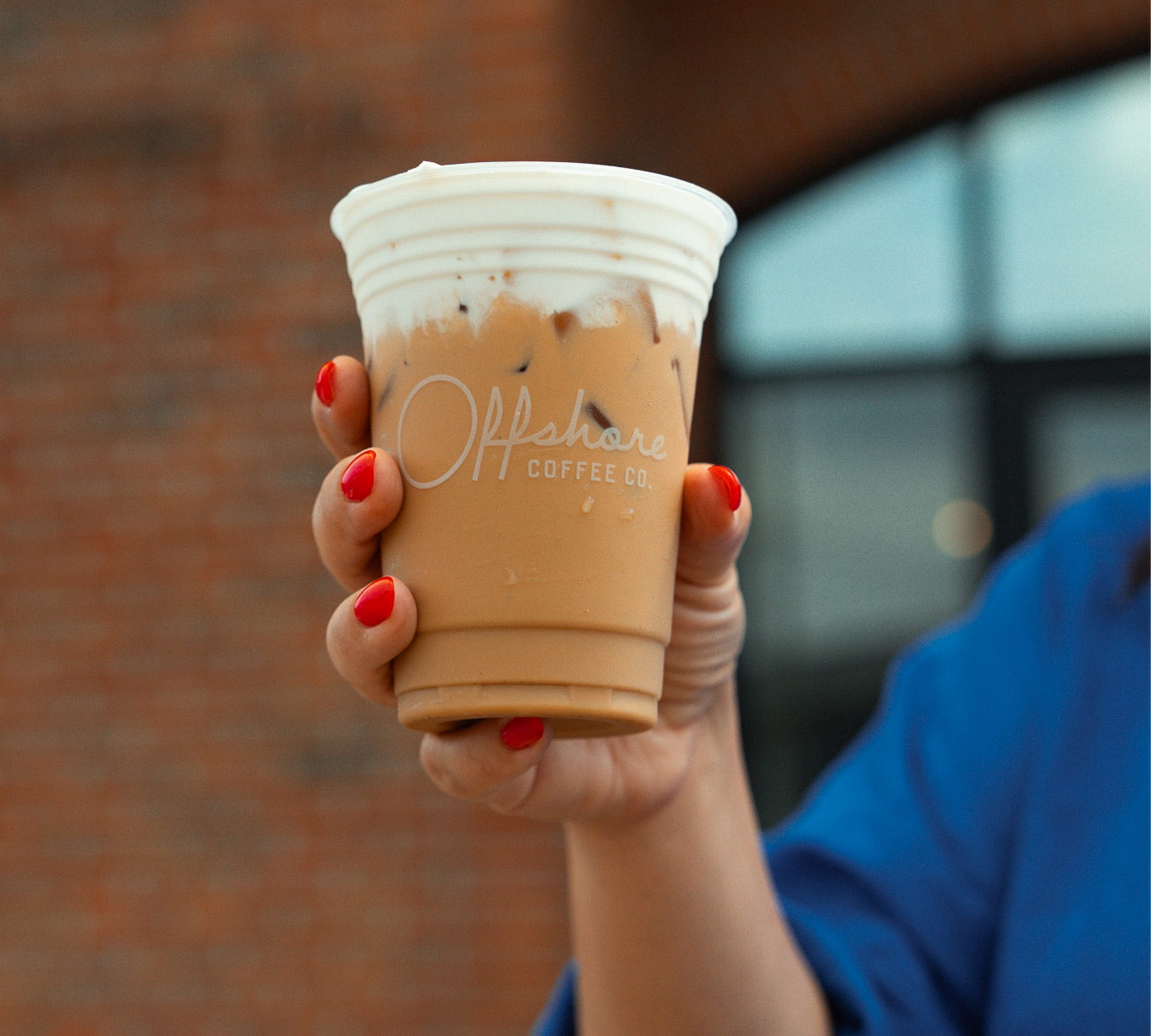
The tiny two-ounce beverage at the heart of coffee culture. Most people know espresso through specialty lattes and might be less familiar with its flavor profile on its own. Even with syrup, milk, and cold foam, having a high-quality, well-brewed shot as the base still matters. Loving espresso means learning, and chasing the perfect shot becomes an addictive process once you know what you’re tasting for.
What are we tasting for?
If you’re tasting a shot of espresso for the first time, you may need to give yourself a few chances to expand your palate. Espresso is an incredibly strong and complex flavor experience. The world’s most expensive bottle of bourbon is going to be totally wasted on a group of college kids, but the connoisseur who has years of tasting under their belt? That’s the person who’s going to appreciate a vintage bottle.
A “good” espresso has the following qualities:
A balance of acidity and bitterness
Sweetness
A flavor profile resembling dark chocolate
A pleasant, lingering finish
Now, remember, it’s coffee—it’s never going to taste like marshmallows no matter what the roaster’s tasting notes may promise. But imagine an artisan chocolate bar with a high cacao percentage: lightly sweet to cut bitterness while still highlighting the quality of the cacao bean, leaving a melt-in-your-mouth finish that lasts.
How to approach building your palate
I can write all day about espresso, but what’s going to do you good is going out to different cafes and trying espresso on its own. While you’re developing your palate, it can be more helpful to know how the espresso should not taste, rather than how it should. Espresso walks a fine line between too acidic, too bitter, and dialed in; picture Goldilocks with a demitasse.
With coffee, things are a little complicated. If you’re at a restaurant with a great wine program, you can be assured that the sommelier has chosen a great bottle. As long as the cork comes off, you’re tasting the wine exactly as the winemaker intended.
In coffee, decisions are made by the farmers and processors at origin, and then by the roaster before it is bagged and delivered to its final destination. Unlike uncorking and pouring a bottle of wine, espresso has the added element of proper brewing to realize its fullest potential. The world’s most expensive, rarest, highest-graded cup of coffee can be botched in its preparation.
So your experience of tasting espresso must be multi-pronged: not only are you tasting to see if the espresso is good, but you’re tasting to see if the espresso is prepared well. This is a lot for a beginner, trust me, but I’m here to tell you that you can develop these skills side-by-side, and I will walk you through it. We also have opportunities to visit our coffee lab for in-person experiences where we guide you through the entire process.
Good vs. Bad
When discussing flavors, much of our discussion can be hindered by thinking in a binary of “good” and “bad.” It’s reductive, simplistic, and locks us into debating our preferences, which are informed by our experiences, our biology, and our whims.
Flavor is subjective, and that’s the fun of it. What’s preferable to me might not be preferable to you, but we can have a productive conversation about what we are tasting and find that we are having the same experience, even if I like a super bright and fruity espresso while you prefer a more classic Italian blend. If we’re able to describe our physical sensations with accuracy, we can connect over the experience despite the discourse we might have.
What it isn’t
Extraction refers to the amount of soluble coffee bean that ends up in your shot glass as brewed coffee. There’s more to unpack here, but for tasting what you need to know is this: coffee can be brewed too long or not long enough, and each mistake has its own recognizable flavor profile—unpleasant in its own distinct way.
Under-extracted
Overly acidic
Sour
Salty
Quick finish
“Face changer”
Over-extracted
Overly bitter
Lingering, unpleasant finish
Astringent
Drying
Hollow
Once you’ve had bad in both directions, a well-extracted shot with an ideal flavor profile makes a lot more sense. Beginners often confuse sourness and bitterness, but here’s a cheat sheet: sourness will be a quick, intense experience, while bitterness will be a lasting, unpleasant taste.
Homework
Go to your favorite cafe this weekend—Offshore sounds like a good plan—and order a sidecar of espresso along with your usual. Close your eyes, take a sip, breathe out, ask yourself what you perceive. Let it cool and focus on one element of sense with each sip. What are you experiencing? Where on your palate are you experiencing it? What’s the physical sensation? Is it quick or is it lasting? Do the flavors lean toward bright fruitiness or nutty chocolate?
Field Trip!
Sensory education is great, and you can absolutely begin your journey self-guided—but it’s kind of like reading Plato outside of a Socratic seminar. Wouldn’t you rather join us for a guided tasting? We offer educational classes at our Coffee Lab that give an opportunity to see an operational roasting facility, work on professional equipment, and meet other people who see coffee as a hobby. You can learn more and register for a session here.
Until next time,
Sam Walla
Education Coordinator at Offshore Coffee Co.
This issue of The Offshore Dispatch was first published on Substack. Read and comment on Substack