Roast Side Chat: Michael Rosas, Director of Coffee at Offshore Coffee Co.

Hi, again, this is Sam Walla, Education Coordinator at Offshore Coffee Co. Welcome to Roast Side Chat, a new podcast brought to you by your friends at Offshore.
This first installment is an opportunity to get to know Michael Rosas, Offshore’s Director of Coffee. Michael has been in the specialty coffee industry for over 10 years, is a certified Q Grader, and is a college professor in addition to his work in coffee.
Everything Offshore does passes through Michael’s hands in some way, from sourcing green coffee and developing roast profiles to training our staff and curating the experience of our cafes.
The below interview has been edited for length and clarity. The full conversation can be heard on Spotify or YouTube.
Sam: My coffee journey started with you. You hired me and trained me. Where did yours begin?
Michael: I studied communication and theater. Right out of college I didn’t get into graduate school for theater, which I wanted to do, so I went looking for jobs in marketing and communication. I wanted a role at a coffee shop that was trying to connect with the university, because I’d had a lot of success with community building at universities. My first job was at a coffee shop in West Long Branch that was also a roastery, and there I started taking classes with Counter Culture Coffee, who were offering them. From there I moved to Cafe Volan in Asbury Park, where I stayed for a really long time.
Then I got into graduate school for acting, so I took a hiatus from coffee and moved to Providence, Rhode Island. I started working in coffee again there, because it’s very seductive. Then COVID happened, I came home from grad school, and I started at Offshore.
S: When did coffee become real for you as a career? Is it real now?
M: It’s not real now. [laughs] A lot of people say, make your hobby your job. As a millennial, I’ve been crafty about taking the things I love and figuring out how to make them worth my time. I’m also a college professor. I teach voice and accents to BFA actors at NYU, and voice and diction at Monmouth University. That’s me taking my passion for theater and acting and turning it into a job. Same thing with coffee, being the Director of Coffee at Offshore.
All that is to say, I don’t know if these feel like careers to me. They feel like passions I’m thrilled to keep doing day after day.
S: People are often surprised to hear there’s such a thing as a coffee career.
M: Yes, hospitality is a profession. Some people are really good at it and some are less strong, but at the end of the day, when I meet a hospitality professional, I think, this means something to you. You have intention. You have craft.
S: It’s easy to picture what a barista does, because that’s who people interact with. What goes into your job that the average person doesn’t know about?
M: First things first, barista is a very specific job. Sometimes people see barista and then manager as the next natural step, but just because you make a great barista doesn’t mean you make a great manager, and the reverse is true too. They’re different roles. I loved barista-ing; I did not necessarily love managing. One of the founders, Jack, said, “Let’s get you in a position where you’re still in touch with coffee and still passionate about education.”
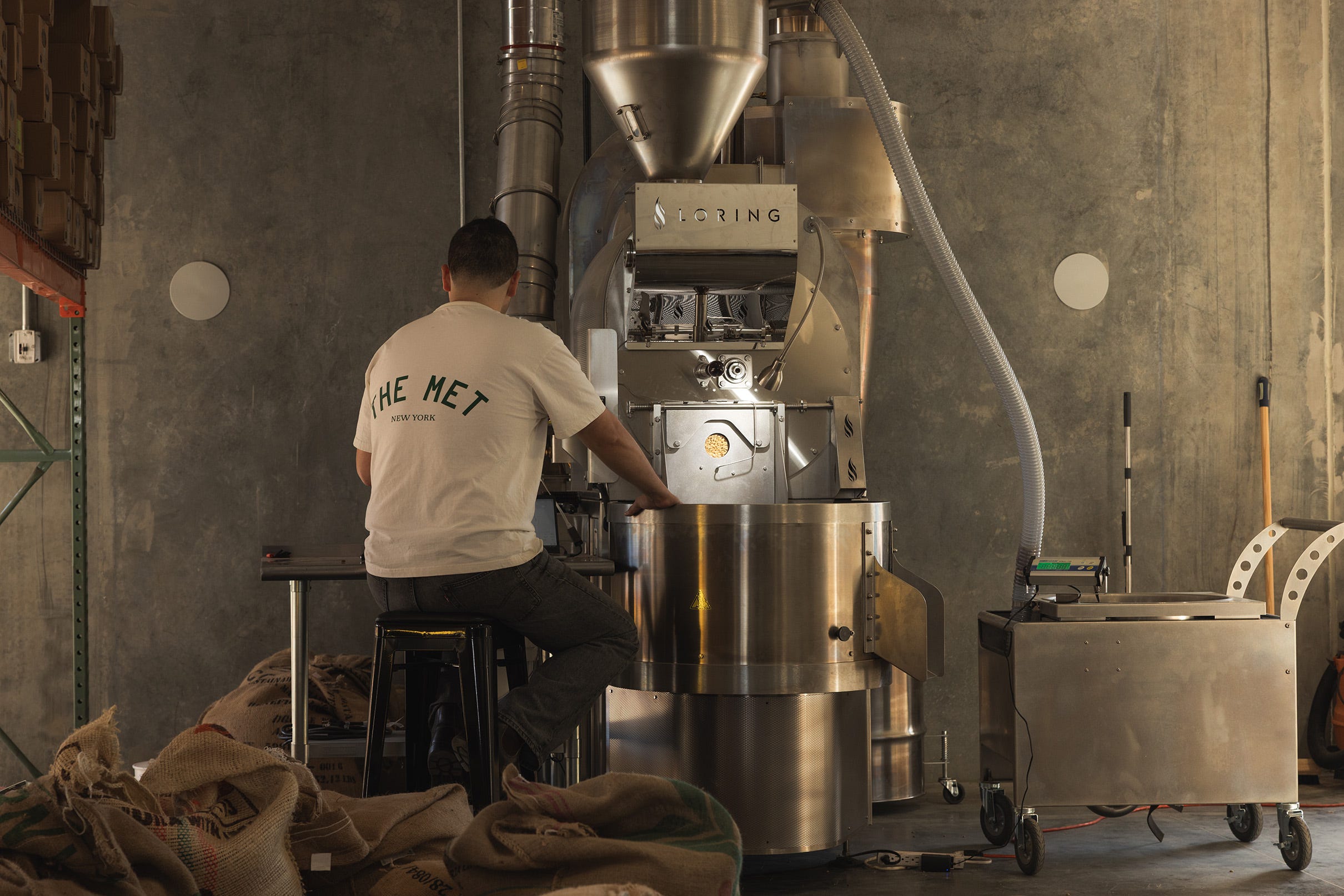
Most people interact with baristas, but they’re the final point in the supply chain. Before the baristas, you have roasters, the roasteries producing the coffees baristas use. Before that, in the roastery, you have coffee buyers, which is also my job. I taste green coffee samples after I roast them to decide what goes into my portfolio, whether that’s in a blend or as a single origin. Maybe a coffee is really tasty as a filter coffee but not as an espresso; or maybe it’s not great as a filter but really shines in an espresso machine. I’m curating my portfolio for that.
Before the green coffee buyer, you have the importer. Almost all the coffee in the world isn’t produced in the United States, so the importer deals with the import process and makes sure the coffee the roaster receives matches what was tasted when it was originally sampled. Then you have the exporters, the producers, the farmers and the millers. So many of the people in that supply chain aren’t even in this country. There are many, many careers that someone passionate about coffee can find in this industry.
S: You became a Q Grader two years ago. What is that, what was the process like, and did it level up your skills?
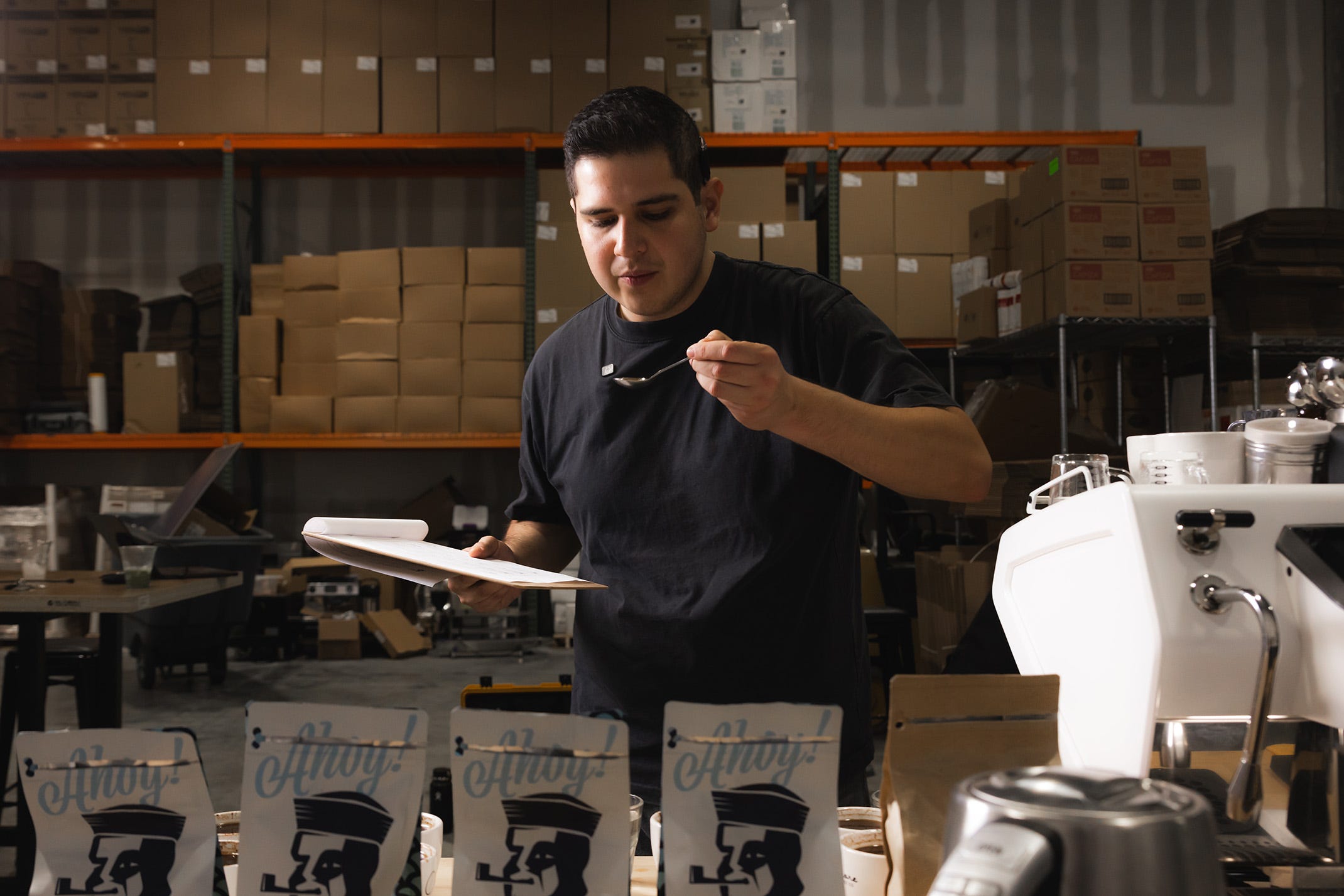
M: A Q Grader certification is kind of the equivalent of a sommelier. I’d gone down this coffee rabbit hole where I wanted to learn everything I could and taste all the coffees. I’m really into criteria. It’s not enough for me to say, “I think this tastes good.” I have to be able to describe why, and why something is high value or not.
I went into the certification wanting to know whether the things I value in coffee align with the Coffee Quality Institute (CQI), the international organization that used to hold the Q Grader certification. It’s now the Specialty Coffee Association (SCA). Basically: is my palate calibrated to an international standard of quality? The testing was one of the most stressful things I’ve done. I told my bosses many times that I didn’t think I was going to pass. They were very supportive, but apparently on the back end they were saying, “There’s no way that’s true.” I was really worried. Fortunately I did pass, under instructors who told me, “You’re focusing too much on this, focus on this.”
It didn’t teach me something I could have learned in a week. What it did was validate my experience of what is seen as a high-scoring cup of coffee versus what is not.
S: What does an average day look like?
M: We have a lot of wholesale clients as well as our own cafes, so a big part of the day is asking: is everyone okay? Are all the machines working? Once the emergencies are out of the way, I think about our coffee portfolio. Are the coffees we’ve roasted maintaining their quality and consistency? A lot of it is tasting and testing the coffees we have in house, as well as the recipes for our machines, making sure everything is as optimal as it can be.
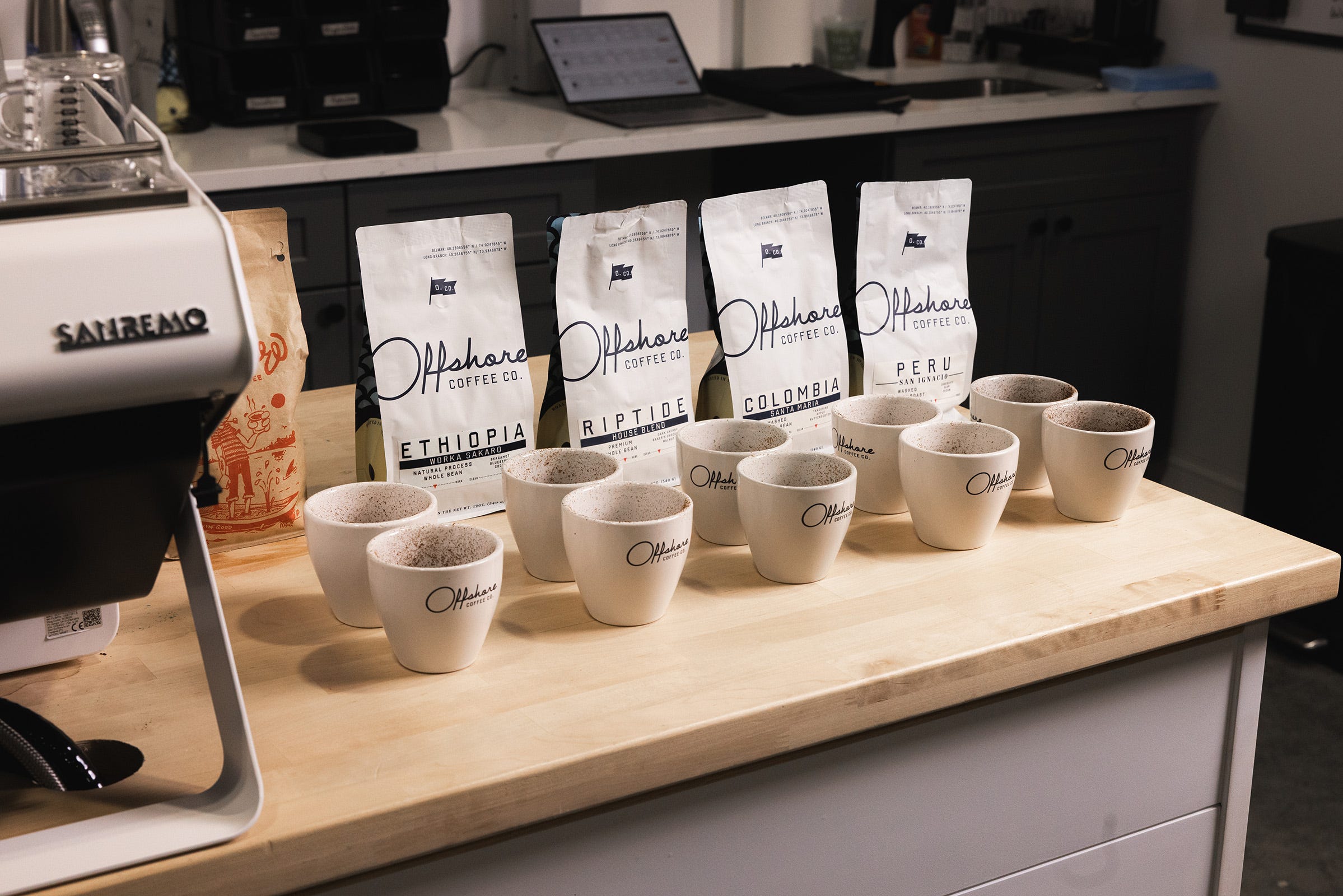
Coffee is constantly changing. It’s an agricultural product, typically harvested within the last six to 12 months. Even if a bag comes from the same producer, it won’t necessarily react the same way in our roaster. So it’s my job to make sure nothing drifts too far from the optimal experience we want to give people. That means cupping, which is tasting and sampling the coffees to check for consistency. It means brewing them, whether in our batch brewer, as a pour-over or as espresso, and saying, “I feel like this could be a little better if we did this,” and then testing to confirm it.
It also means looking at our green coffee inventory. What are we low on? Can we get more of the same coffee, or do we need to find something different? And then there are single origins, where I’m constantly talking to importers. I got sent 10 samples today from an importer about coffees that excited them. Now I have to sample roast them. Sample roasting 10 coffees takes about three to four hours. Then I wait a day or two before I can taste them, and then I make really diligent notes on which ones I like, why I like them, and what I can use them for. And then, buying them.
I also work on the matcha and do taste testing at our cafes. And I’m kind of IT support, too, because I love using the computer.
S: I remember you being so excited when you found out how refrigerators work.
M: I’m obsessed with how things work. I’ve learned a lot about coffee equipment, grinders and espresso machines, and I’m kind of a gear head. I love thinking about how gear works and why it’s different. That goes with the emergencies part of the job: if I have to fix something, I want to know completely how it works before I fix it.
» Rapid Fire «
S: Favorite local spot for coffee?
M: That’s hard. It’s gotta be Offshore. If it’s not Offshore, you can find me at Komodo Coffee in Long Branch. I live in Long Branch, Chris is so cool, and the spot is really chill.
S: Soundtrack of the season?
M: I recycle music constantly, and what I recycle most is R&B from the 2000s and 2010s. That’s always on. You’ll probably hear me listening to a lot of Ne-Yo.
S: What are you obsessed with right now, not coffee related?
M: Bossa nova. It’s activating my body in really fun ways. The music is moving me, and I just want to listen to more of it right now.
S: Coffee shop order: go-to or standard?
M: The drip coffee. If there’s a single origin on, that’s what I’m getting, and I’m usually getting two. What’s important is always having two cups, because you never know if the first one was a fluke. The experience is still going.
S: Coffee hot take?
M: Fresh isn’t always best. I think people are obsessed with coffee being straight out of the roaster, and I love sipping on a coffee that was roasted three weeks ago, even up to three months ago. When coffees rest, something happens where, in my experience, all you really taste is sweetness. You do risk it going stale, so three months might be the furthest I’ll go. But with a coffee between one and two months old, so much of the bitterness goes away and it’s just this sweet bomb. The sparkling quality of fresh coffee probably dissipates too, but I feel like it goes away along with the bitterness, and you just get all this sweetness.
S: Any coffee eccentricities, things you do and can’t really explain?
M: There is nothing I do that I can’t explain. [laughs] My life is very much about this: if you can’t explain why you do something, then why are you doing it? There is nothing in coffee where I’m like, “Yeah, I do that because, I don’t know.” There’s always a reason.
S: That’s a perfect answer. It summarizes you.
This issue of The Offshore Dispatch was first published on Substack. Read and comment on Substack